Showing posts with label News Clippings. Show all posts

Friday, January 24, 2014

On the other side of Tank Bund - P. ANURADHA REDDY


(c) Times of India, Hyderabad edition on 05-Oct-2013


On the other side of Tank Bund

P. ANURADHA REDDY 


In Hyderabad State, Secunderabad thrived as a cosmopolitan city — a far cry from the non-descript twin of Hyderabad that it’s grown into today. Anuradha Reddy reminisces about growing up in a Secunderabad which was almost European. Her life, she recollects, was shaped by her Italian teachers, French and Jewish friends of her mother, apart from a whole lot of Parsi, Marathi, Anglo Indian, Telugu and Tamil ‘uncles’ and ‘aunties’. Now, how’s that for cosmopolitan! 
    Having lived most of my life in Walker Town (now Padma Rao Nagar), people brand me as a ‘Secunderabadi’. Funnily enough, until I was nine, our address ended with ‘Hyderabad, Deccan’ and, in my mind I was always a Hyderabadi. When Hyderabad State was divided and the Telangana was merged into Andhra Pradesh in 1956, I couldn’t fathom why my address changed to Andhra Pradesh.
    My maternal grandfather, B Ranga Reddy (the first Hindu officer in Hyderabad Civil Services), belonged to an agricultural family with land holdings in Bholakpur (below Tank Bund). His decision to send his daughters to St Ann’s School brought in this enormous Europeanisation into our upbringing. However, my paternal grandfather, C Ramlinga Reddy, hailing from the royal family of erstwhile Sirinapally Samasthan, lived in a gadhi (Telangana for palace) near Moazzamjahi Market road, where all the big houses sprang up, with the northward expansion of the city after the old walled city. My father, C Sreeram Bhoopal was also a post 1948 HCS officer.
    My maternal grandmother, Vasudevamma’s home was always teeming with family visitors from the districts. At any point in time, there were 50 women folk in the household. The family oil baths on Sundays were a cultural reverie. While we oiled and washed our hair and lay on grass mats, drying our hair with sambrani smoke, listening in to women folk exchanging stories on infidelity, famine etc., in the districts, was eye-opening. Vasudevamma’s best friends 
were Mudaliar ladies who lived in Walker Town. I picked up Telugu, Tamil, Urdu, Marathi and Kannada just by interacting with these neighbours and friends.
My ammamma was a movie buff and took us to watch many Telugu movies at Rahat Mahal, Minerva, Manohar, Paradise (which was the first air-conditioned theatre). Hindu households in Hyderabad state followed the prevalent purdah system. The ladies’ cars had a purdah separating the driver from the backseat. Theatres had separate entrances for the ladies and the balcony had a screen which was drawn back only when the movie was running. We also had three English movie theatres — Tivoli, Dream Land and Plaza.
Back then, all of Walker Town had about 18 houses and everyone knew everyone. My mother, Snehalatha Bhoopal had a lot of European, Anglo Indian and Jewish school friends. Rebecca Samson (Jewish), whose father distributed English movies, lived in Marredpally, as did another childhood friend, Violet Primacoff (whose father was a Russian decorator, who came to Hyderabad pre-World War II). With a sizeable Anglo Indian community in Walker Town, Christmas celebrations were an integral part of winters. We served wine and cake to carol singers who visited our house during their rounds of the colony... Oh! it used to be 
so much fun.
The Parsi and Anglo Indian communities in Secunderabad contributed hugely to the development of modern Hyderabad, serving in aviation, railways, teaching, journalism, and any field that demanded a command over English. Who can forget their contribution to the local cuisine with their bakeries and hotels? My schooling exposed me to Christianity. While both my grandmothers were devout Hindus, they celebrated all festivals. After my father’s HCS training at Pune, we returned to Secunderabad where I was enrolled into Mrs Roshiers’ Froebel School. Mrs Roshier was an Anglo Indian who helped us gain a strong foundation in English. Subsequently, St Ann’s Convent, exposed me to Roman Catholicism. 
Sister Adriana, an Italian nun (my mother’s math teacher and my principal) came to Secunderabad as a 16-year-old, dedicated her entire life, (like many others) to educating the girls of the twin cities.
My dad had a lot of Muslim and Kayasth friends and colleagues whom we called mamu, chichha, etc., and everybody loved socialising. No revelry was complete without music and poetry session. Pandit Ravi Shankar (guru of Sudha Ghanshyam Girji) composed a piece for me on one of his regular visits to the city. It was another time, another place, never to be forgotten, always treasured.
    (The writer is an aviation historian and
    convener INTACH Hyderabad) 
Once upon a time... 
    The Resident, who had just moved into the Hyderabad state, desired to visit the Garrison Club, which later came to be known as the United Services Club, where most of Hyderabad’s European gentry socialised. Back then, the club was situated in a non-descript little building. When Salar Jung I, the then Prime Minister of Hyderabad, got to know of the Resident’s wish to spend his evenings at the club, he immediately offered his hunting lodge as premises for the club. He felt that the Resident deserved to spend his evenings in a 
building which befitted his stature and rank. And thus, in 1903, the elite Secunderabad Club was born. To honour Salar Jung, it was decided that his lineal descendants will be made members of Secunderabad Club without ballot or admission fee. It’s another matter that not many among Hyderabad’s gentry was allowed into the Club in the years that followed, thus prompting Mahbub Ali Khan, Asaf Jah VI, to set up the Nizam Club, a gentlemen’s club exclusively for Hyderabadis.

Secunderabad Club, which was set up on Salar Jung’s jagir, in Tokatta Village


A children’s fancy dress party at Mr Hankim’s house, Secunderabad, January 23, 1905


A scene outside Paradise in 1959


A 1912 picture of the first automobile showroom in Secunderabad


James Street, Secunderabad, 1890

A Hyderabad we didn’t see

(c) Times of India, Hyderabad edition on 05-Oct-2013.

A Hyderabad we didn’t see

CHRISTINA FRANCIS 


    Tto capture Hyderabad’s soul in a dozen pages would be next to impossible, but it was our sincere effort to showcase to you, our readers, a Hyderabad, which many of us haven’t seen. And what better time than now, when we stand on the threshold of yet another chapter in our city’s history! In the process of putting together Nostalgia, our 13th Anniversary Special, we stumbled upon some forgotten stories, learnt of splendid landmarks lost in the sands of time, and rediscovered history that rarely finds a mention in our school textbooks. We hope you enjoyed this ride back in time.

On May 22, 1892 the latest American technology — treadle phonograph — arrived in Hyderabad. While the Europeans listen in to the sounds coming in via the long tube of the phonograph, with animated expressions, their Indian attendants look on indifferently


Water Party at Mir Alam Tank, a popular picnic and boating spot. Mahbub Ali Pasha is seen with European and Hyderabadi nobility

Thursday, January 23, 2014

Old photos

(C) Times of India, Hyderabad edition dated 05-Oct-2013.


Trained ‘domestic’ tigers at the Falaknuma Palace
First Salar Jung, Muktar-ul-Mulk (centre), on his visit to London. During this visit to Europe, he had acquired art pieces like the Veiled Rebecca.


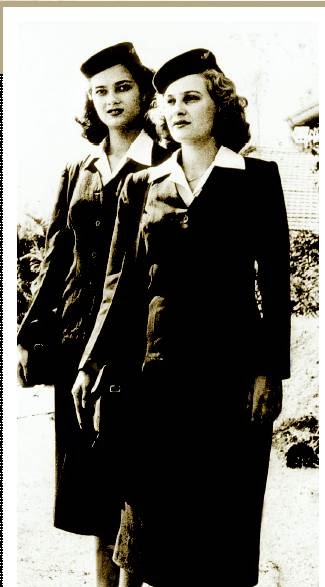
(above) Aban Pestonji Chenoy (below) One of the first Air Hostess in Hyderabad, Maureen O’ Hara
Rita Nordman and (right) Peggy Tocher of Secunderabad were the earliest airhostesses to work for the Deccan Airways.

HEH The Nizam’s post carrying vehicle


NIZAM’S FIRST FLIGHT! 

Osman Ali Khan, the VII Nizam was petrified of air travel. His first flight was when he visited Delhi to attend the Rajpramukh’s Conference. He travelled with a 39-member-entourage in two Dakotas which landed at the Willington airport. It’s said that fresh water from the royal spring Baam Ruknud Dowlah, near Mir Alam Tank, was flown down for his every day from Hyderabad to Delhi.

Hyderabad Polo Team with British Regimental team Secunderabad at Bolarum Grounds, 1877


1902 Charminar

B
A 1902 picture of the official elephants that carried the Nizam, Mahbub Ali Khan, Asaf Jah VI on ceremonial occasions, shot in the backdrop of the Charminar. These were the same elephants upon which the Nizam went to attend the Delhi Durbar in 1903.

(C) Times of India, Hyderabad edition dated 05-Oct-2013.

Wednesday, March 28, 2012


A Hyderabad you didn’t know about ( 18th Mar 2012 in TOI )

There are nuggets of history tucked away in every corner of the rather ordinary looking precincts of the City Museum, which offers rare glimpses of Hyderabad

Karthik Pasupulate 


    Terracotta burial pieces discovered in megalithic sites in the city form the first exhibit you will come across at the City Museum, new extension of the HEH Nizam Museum, Purani Haveli. Those unremarkable pots dating back to 4,000 years are the oldest signs of life in the city that was christened Hyderabad in 1591. Not a bad start is it? “We don’t know what this region was called before, but what these burial pieces do establish clearly is that there were people living in this place from over four thousand years ago. We all go back a long time,” says Dr Bhaskar Rao, chief curator, HEH The Nizam’s Museum, sitting in his office.
    A strategically placed 125-year-old manually operated wooden lift doubles up as the entrance of his office. The Purani Haveli was once the erstwhile official residence of the Nizam. Now it houses a school, junior college and the museum.
ORIENTATION FILM There’s more to Hyderabad than we know, says Anuradha Naik, the museum architect, 
whose family has served the Nizam for six generations now. “You must watch the 15-minute orientation film which showcases the chronological history of Hyderabad, starting from the megalithic period through the reign of the Chalukyas, Kakatiyas, Bahamanis, Qutub Shahis, Aurangazeb to Independence and the present day,” she says.
ALL THAT GLITTER The most interesting segment of the museum is the one about Golconda diamond mines, the oldest and the only known diamond mines till the 18th century. It has imitations of the Hope Diamond and the Kohinoor, which are perhaps the most famous diamonds excavated from the mines.
    That’s not all, these mines have a Mahabharatha connection as well. “Myth has it that Karna’s crown in the Mahabharatha was encrusted with diamonds from the Deccan. It is possible that the diamonds could have come from the Golconda mines as it was the only renowned diamond mine in the subcontinent then,” Anuradha informs. 
MAPS On display for the first time are seven specifically designed maps that trace Hyderabad’s fascinating journey from the 13th century to the present times. The idea was to showcase the growth of the city through these maps. It is fascinating to see that the trade route that connects Golconda to Machilipatnam on to the North to Aurangabad, which we call NH9 today, existed from the 13th century and before! The whole city developed around it over the centuries.
    Anuradha Naik explains how the city has grown a complete anti-circle over the last 700 years. “Golconda was built just along the edges of the fort, it was an outpost of the Kaktiyan Kingdom. Charminar and the garden suburb of Hyderabad followed. The maps show how various localities kept getting added over centuries. It is fascinating to see how the city has grown in an anti-clockwise direction — starting from the Golconda now to the South West of Hyderabad, then goes South of the river Musi, the North of the Musi River to the residency, and spreads to Banjara Hills in the 20th century. And now with Attapur, it has come a full circle,” she says.
    Also, a touch screen kiosk narrates a pictorial history of 50 of the city’s mohallahs, in 
English, Hindi, Telugu and Urdu.
OTHER THINGS The Deccan was also known for its weapons, gold, iron and steel, swords, daggers embedded with beautiful bidri and the fabric works also make for an interesting watch. There are many treasures to look out for that instantly transport you across eras — the sepia-tinted photographs of the old taxi stand at Afzalgunj, the now defunct Darulshifa, a 400 bed hospital built by Quli Qutub Shah in 1595, pictures of the first and second chloroform commissions, Sarojini Naidu, old farmans printed in Urdu, Parsi, Modi and Marathi languages, the old sale deed of Mukarramud-Daula’s deodi, rare pictures of Princess Durru Shehvar and 
the erstwhile royalty of the Hyderabad state on the walls.
THE CLOTHES The famed 130-cupboard which once used to house the incredible wardrobe of Nizam Mehboob Ali Khan, now showcases the clothes that the people of the region wore through the centuries. “The Nizam was known to never repeat the clothes he wore and he used to give them away. So, we don’t have any of the clothes of Nizam Mehboob Ali Khan, but we do have a dummy sherwani which was used as a measure by his tailors,” says Anuradha. Some accessories like his boots, perfumes and silver hunting paraphernalia are also displayed. There’s a pure gold Khasdan (pan box) and a spittoon gifted to the Nizam by Sahibzadi Jahandar un-nisa Begum, (wife of Viquar ulumra) and the diamond studded tea cups and a pure gold tea set that give you some glimpses of the good life of yore.
ROYAL BIRYANI How can you have a city museum without the food of Hyderabad? There is a recipe of the authentic Hyderabadi biryani on display. Apparently there are as many as 40 different varieties of Hyderabadi biryani! How many varieties have you tried, you might want to check out the museum to find out.
    karthik.pasupulate@timesgroup.com 


(above) The gold cutlery used by the Nizams and (below) golden Khasdan (paan box) and spittoon


Manually operated lift


Swords and daggers


A miniature of Nampally railway station


Hookah


Antique postcards

Friday, May 13, 2011

Money value in 1940


Look at this item. Gold price was 63p per tola. Again this is old tola which is about 12 gms. Meaning in 1940 gold price was 50 paise per tola ( 10 gms).


Also look at Deposit advertisement inviting to deposit Rs 10 at funny intrest rate...