

Showing posts with label Nizam. Show all posts
Showing posts with label Nizam. Show all posts
Thursday, February 12, 2015
NIZAM STATE ROADWAYS
NIZAM STATE ROADWAYS
(c) http://www.team-bhp.com/forum/vintage-cars-classics-india/90257-images-traffic-scenes-yesteryears-6.html
The origin of NSR dates back to June1932, when it was first established as NSR-RTD (Nizam State Rail & Road Transport Department), a wing of Nizam State Railway in the erstwhile Hyderabad State, with 27 buses and 166 employees.
SIZE AT INCEPTION (1932)
Number of Buses. 27 (First generation buses were exported from Scotland by Albion Motors)
Number of Employees. 166
Capital Investment. (Rs. in Lakhs). 3 .93
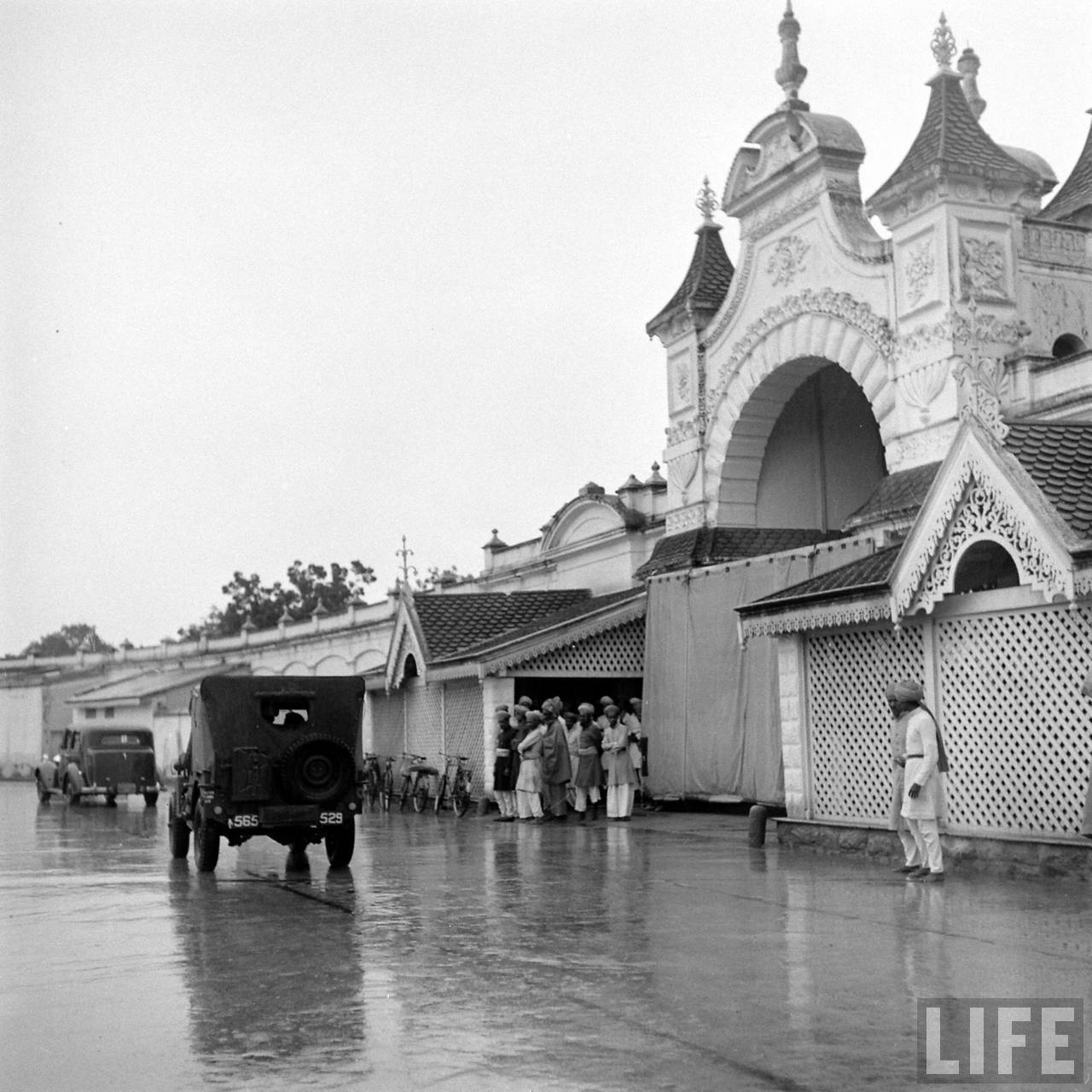
1. I THINK IT IS NEAR St ANNS CONVENT SECUNDERASAB.
2. THIS TAKES ME BACK TO MY HAPPY DAYS PRE 1948.
3. I guess the picture is taken at Secunderabad Railway Station (If anybody knows the exact place, please share with me also)
(YES IT IS THE ENTRANCE SIDE VERANDA OF BOOKING OFFICE,BEFORE MIRZA ISMAIL PLATERED THE ELEVATION PRE 1945)
4. SECUNDERABAD STATION SHAKRAM/TANGA ADDA "IN" GATE & 111 CLASS WAITING HALL.
5. TANK BUND,SOMEBODY SEEMS TO HAVE ENOUGH TIME TO UNDRESS & TAKE SWIM !!.
6. The group of NSR – Deccan Queen’s can be seen in this picture. It was taken at the time on Indian Army capturing Hyderabad State. From here NIzam use to take salute from his army.
Deccan Queen
The NSR buses also known as Deccan Queen’s. There are few buses still existing and are placed in the museum
The below two pictures are captured from the APSRTC museum
1. APSRTC Bhavan outside
2. Vijaywada Bus Stand (2 PICS)
Registration Numbers
Before the last Nizam Osman Ali Khan bahadur handed over the NSR-RTD to Indian Govt. he made an agreement that every bus number should include letter Z, Z stands for Zahra Begum, Nawab Mir Osman Ali khan Nizam VII mother.
Hence the APSRTC owned vehicles exclusively include letter "Z" in registration number with a unique series viz. the late 1980s include AAZ, AEZ, AP9Z, AP10Z, AP11Z,AP24Z, AP28Z, AP29Z,AP31Z etc.


Thursday, November 22, 2012


Wednesday, March 28, 2012
A Hyderabad you didn’t know about ( 18th Mar 2012 in TOI )
There are nuggets of history tucked away in every corner of the rather ordinary looking precincts of the City Museum, which offers rare glimpses of Hyderabad
Karthik Pasupulate
Terracotta burial pieces discovered in megalithic sites in the city form the first exhibit you will come across at the City Museum, new extension of the HEH Nizam Museum, Purani Haveli. Those unremarkable pots dating back to 4,000 years are the oldest signs of life in the city that was christened Hyderabad in 1591. Not a bad start is it? “We don’t know what this region was called before, but what these burial pieces do establish clearly is that there were people living in this place from over four thousand years ago. We all go back a long time,” says Dr Bhaskar Rao, chief curator, HEH The Nizam’s Museum, sitting in his office.
A strategically placed 125-year-old manually operated wooden lift doubles up as the entrance of his office. The Purani Haveli was once the erstwhile official residence of the Nizam. Now it houses a school, junior college and the museum.
ORIENTATION FILM There’s more to Hyderabad than we know, says Anuradha Naik, the museum architect, whose family has served the Nizam for six generations now. “You must watch the 15-minute orientation film which showcases the chronological history of Hyderabad, starting from the megalithic period through the reign of the Chalukyas, Kakatiyas, Bahamanis, Qutub Shahis, Aurangazeb to Independence and the present day,” she says.
ALL THAT GLITTER The most interesting segment of the museum is the one about Golconda diamond mines, the oldest and the only known diamond mines till the 18th century. It has imitations of the Hope Diamond and the Kohinoor, which are perhaps the most famous diamonds excavated from the mines.
That’s not all, these mines have a Mahabharatha connection as well. “Myth has it that Karna’s crown in the Mahabharatha was encrusted with diamonds from the Deccan. It is possible that the diamonds could have come from the Golconda mines as it was the only renowned diamond mine in the subcontinent then,” Anuradha informs. MAPS On display for the first time are seven specifically designed maps that trace Hyderabad’s fascinating journey from the 13th century to the present times. The idea was to showcase the growth of the city through these maps. It is fascinating to see that the trade route that connects Golconda to Machilipatnam on to the North to Aurangabad, which we call NH9 today, existed from the 13th century and before! The whole city developed around it over the centuries.
Anuradha Naik explains how the city has grown a complete anti-circle over the last 700 years. “Golconda was built just along the edges of the fort, it was an outpost of the Kaktiyan Kingdom. Charminar and the garden suburb of Hyderabad followed. The maps show how various localities kept getting added over centuries. It is fascinating to see how the city has grown in an anti-clockwise direction — starting from the Golconda now to the South West of Hyderabad, then goes South of the river Musi, the North of the Musi River to the residency, and spreads to Banjara Hills in the 20th century. And now with Attapur, it has come a full circle,” she says.
Also, a touch screen kiosk narrates a pictorial history of 50 of the city’s mohallahs, in English, Hindi, Telugu and Urdu.
OTHER THINGS The Deccan was also known for its weapons, gold, iron and steel, swords, daggers embedded with beautiful bidri and the fabric works also make for an interesting watch. There are many treasures to look out for that instantly transport you across eras — the sepia-tinted photographs of the old taxi stand at Afzalgunj, the now defunct Darulshifa, a 400 bed hospital built by Quli Qutub Shah in 1595, pictures of the first and second chloroform commissions, Sarojini Naidu, old farmans printed in Urdu, Parsi, Modi and Marathi languages, the old sale deed of Mukarramud-Daula’s deodi, rare pictures of Princess Durru Shehvar and the erstwhile royalty of the Hyderabad state on the walls.
THE CLOTHES The famed 130-cupboard which once used to house the incredible wardrobe of Nizam Mehboob Ali Khan, now showcases the clothes that the people of the region wore through the centuries. “The Nizam was known to never repeat the clothes he wore and he used to give them away. So, we don’t have any of the clothes of Nizam Mehboob Ali Khan, but we do have a dummy sherwani which was used as a measure by his tailors,” says Anuradha. Some accessories like his boots, perfumes and silver hunting paraphernalia are also displayed. There’s a pure gold Khasdan (pan box) and a spittoon gifted to the Nizam by Sahibzadi Jahandar un-nisa Begum, (wife of Viquar ulumra) and the diamond studded tea cups and a pure gold tea set that give you some glimpses of the good life of yore.
ROYAL BIRYANI How can you have a city museum without the food of Hyderabad? There is a recipe of the authentic Hyderabadi biryani on display. Apparently there are as many as 40 different varieties of Hyderabadi biryani! How many varieties have you tried, you might want to check out the museum to find out.
karthik.pasupulate@timesgroup.com

(above) The gold cutlery used by the Nizams and (below) golden Khasdan (paan box) and spittoon


Manually operated lift

Swords and daggers

A miniature of Nampally railway station

Hookah

Antique postcards

Tuesday, December 7, 2010


Thursday, December 2, 2010

Wednesday, December 1, 2010

Friday, October 22, 2010

Tuesday, June 29, 2010


Monday, May 3, 2010


Thursday, April 29, 2010
Operation Polo

Arms & Equipment
Indian soldiers sort through the arms and equipment left behind by hostiles during the Operations in Hyderabad.

Accession to India
Prime Minister Jawaharlal Nehru and Major General Muchu Chaudhury flank the Nizam of Hyderabad, Mir Osman Ali Khan after he signed the accession to India in September 1948.

Operation Polo
Indian Armoured Corps officers during the Hyderabad Police Action - Operation Polo. Standing at right is Captain (later General and Army Chief) Arun Sridhar Vaidya.

Group Photo
Shri K M Munshi and Swami Ramananda Tirtha along with Major General (later General and Army Chief) Joyanto Nath Chaudhuri and other officers at Secunderabad.

Cheerful Villagers
An Indian Army motor column is cheered by villagers on its way to Naldurg, Hyderabad.

Offering Surrender
Major General El Edroos (at right) offers his surrender of the Hyderabad State Forces to Major General (later General and Army Chief) Joyanto Nath Chaudhuri at Secunderabad.

C-in-C, Hyderabad State Forces
Major General (later General and Army Chief) Joyanto Nath Chaudhuri, Military Governor of Hyderabad and Major General El Edroos, Commander-in-Chief of the Hyderabad State Forces driving in a jeep in Secunderabad immediately after Major General El Edroos had offered his surrender to the Indian Army Commander.
Subscribe to:
Posts (Atom)
